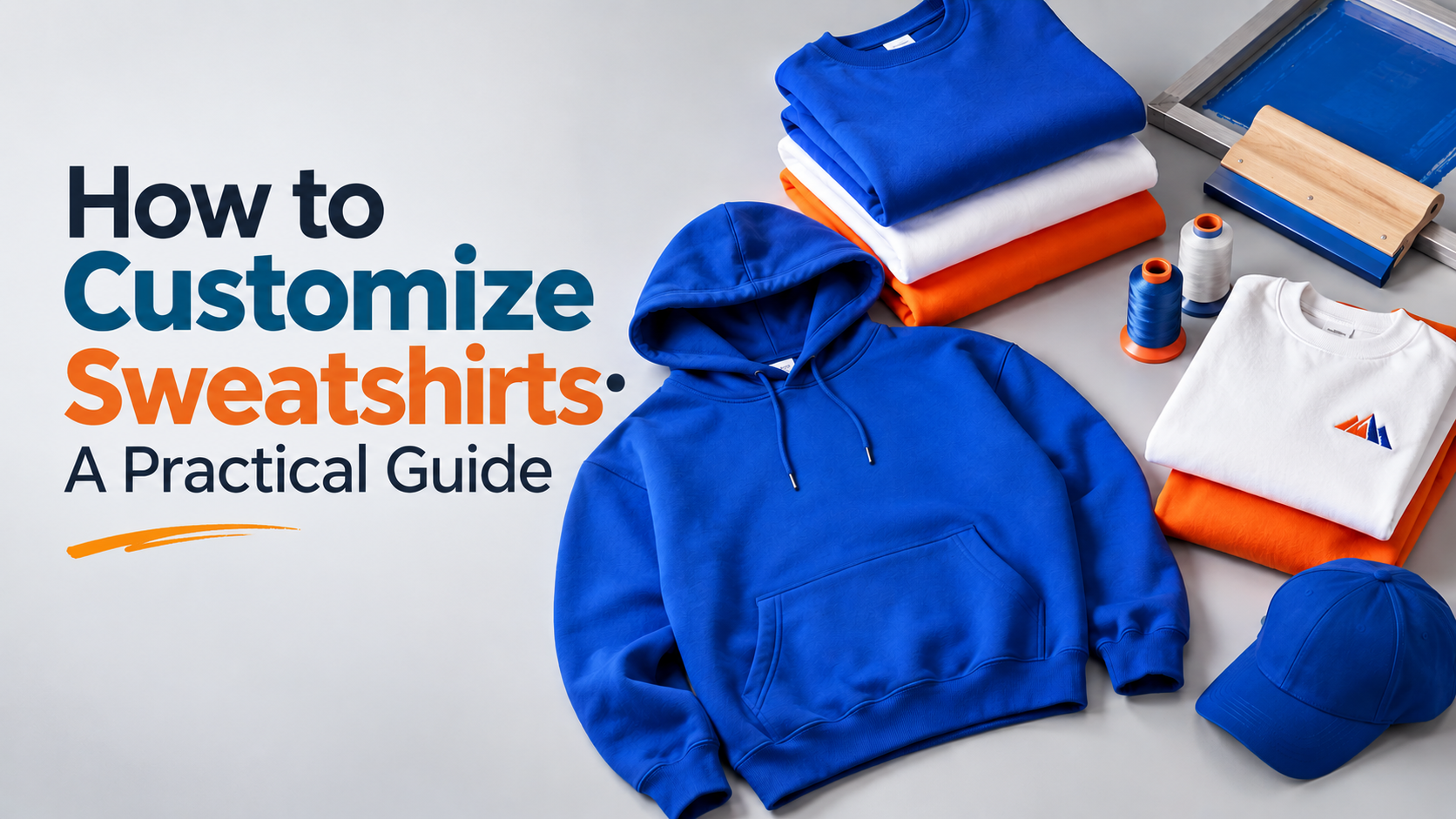
How to Customize Sweatshirts: A Practical Guide
A blank sweatshirt is comfortable. A customized one actually says something, whether that's your brand, your team, an inside joke, or the name of an event nobody wants to forget. If you've been thinking about putting your own design on a hoodie or crewneck but aren't sure where to start, the process is more approachable than it looks. The trick is getting a few decisions right early: the blank, the print method, and the artwork. Sort those out and the rest falls into place.
Why customize sweatshirts in the first place?
People reach for custom sweatshirts for all kinds of reasons. Small businesses use them as walking billboards. Sports clubs and schools order them in bulk for teams and fundraisers. Companies hand them out to staff and clients because a good hoodie gets worn far longer than a mug or a pen ever will. And plenty of individuals just want a one-off piece: a birthday gift, a family reunion, or a design they've had in their head for years.
The point is, there's no single "right" way to do it. A run of 200 matching crewnecks and a single custom hoodie follow the same basic path, even if the method and cost look different at each end.
Step 1: Start with the right blank
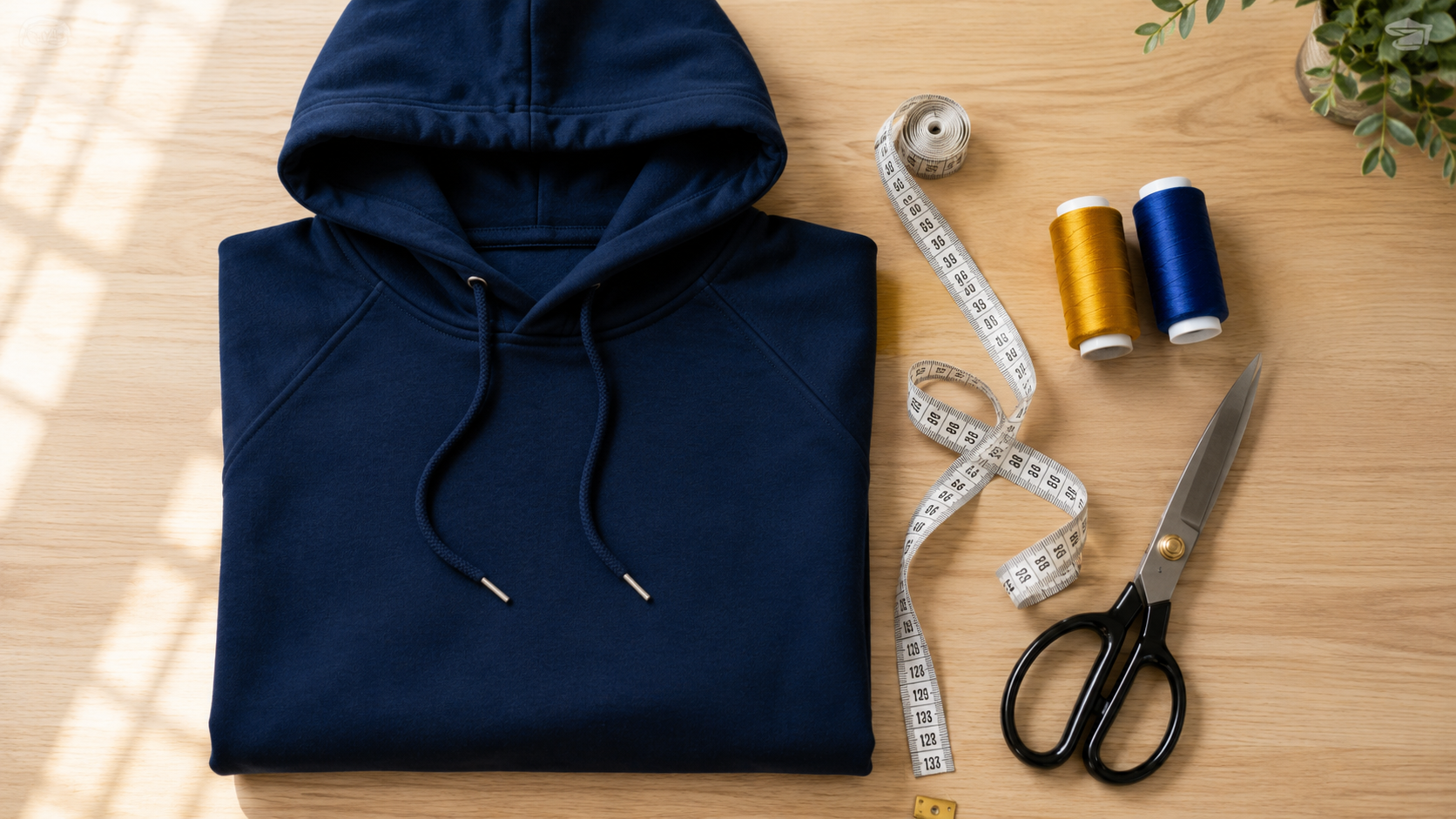
Before you think about artwork, think about the garment itself. A great print on a scratchy, thin sweatshirt still feels cheap. The blank is the foundation, so it's worth a little attention.
Fabric and weight
Sweatshirt fabric is usually measured in GSM (grams per square meter) or ounces. Lighter blends around 8 ounces feel soft and casual, while heavier options closer to 12 or 13 ounces feel structured and premium. Cotton-rich fleece tends to feel warmer and take prints well, while poly blends resist shrinking and hold their shape. If you're not sure where to land, a mid-weight cotton blend is a safe, comfortable default.
Fit and style
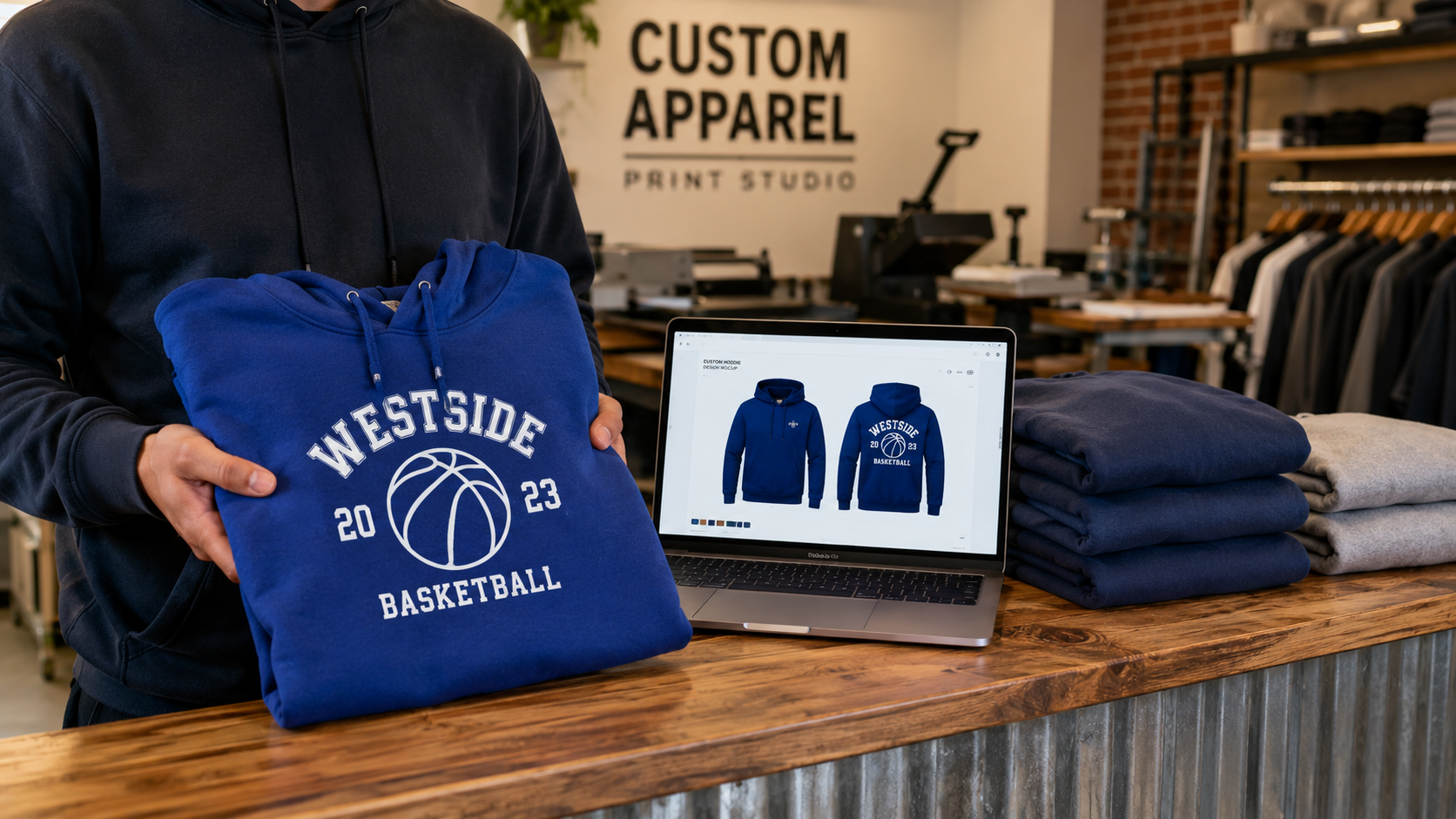
Crewneck or hoodie? Regular or oversized? These choices affect how your design sits and who's likely to wear it. Hoodies give you a front pocket and a hood, which limits where large prints can go. Crewnecks give you a cleaner, flatter canvas. It helps to browse a range of custom sweatshirt styles first, so you can picture your design on the actual cut before committing to a large order.
Color
Garment color changes everything about how a design reads. Light prints pop on dark fabric and can look washed out on white. Dark artwork needs a lighter garment or a different technique. When in doubt, order a sample or ask for a digital mockup on your chosen color before you scale up.
Step 2: Choose your decoration method
This is the decision that shapes your budget, your turnaround, and the final look. Each method has a sweet spot, and the "best" one depends entirely on your design and quantity.
Screen printing
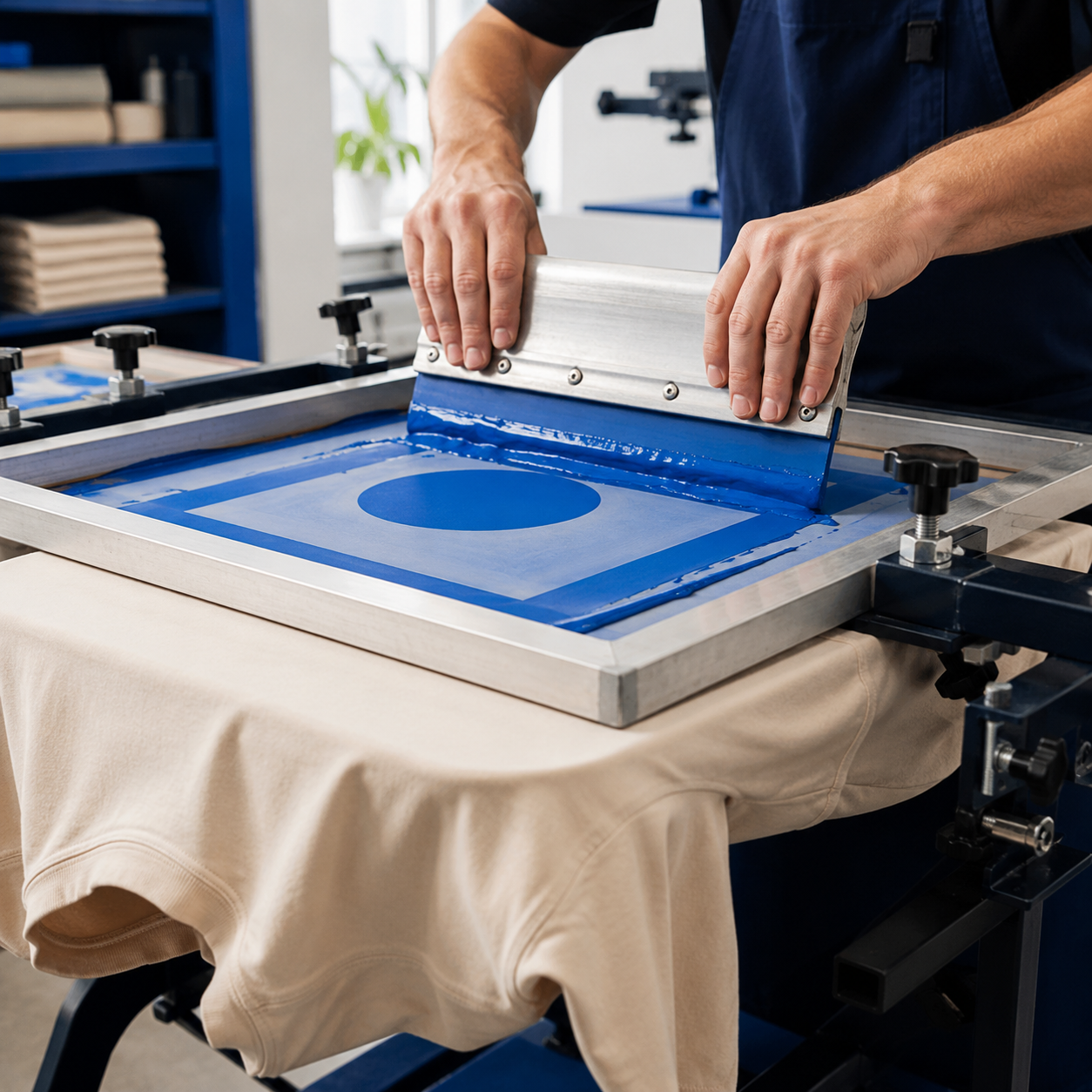
The workhorse of bulk orders. Screen printing pushes ink through a stencil, one color at a time, so it's very cost-effective once you're printing dozens or hundreds of the same design. Colors come out bold and durable. The catch is setup: each color needs its own screen, so it's less practical for a single piece or a design packed with many shades and gradients.
Embroidery
For a premium, textured finish that lasts, stitching is hard to beat. Instead of ink, your design is sewn directly into the fabric, which gives it that structured, professional look you see on company uniforms and polos. It shines on logos, monograms, and text. Detailed embroidery work holds up to years of washing without fading, which is why it's a favorite for staff wear and gifts meant to last.
Direct-to-garment (DTG)
DTG works like an inkjet printer for fabric, laying detailed, full-color artwork straight onto the garment. It's ideal for photo-realistic designs, complex gradients, and small quantities, even a single piece, since there's no per-color setup. It performs best on cotton and lighter garments.
Heat transfer and vinyl
Heat transfer vinyl (HTV) presses a cut design onto the fabric with heat. It's great for names and numbers, simple bold graphics, and small batches where each piece is different, like team jerseys. It's quick and clean, though very large solid areas can feel a little heavier to the touch than a printed one.
Step 3: Get your design ready
A strong idea can still print badly if the file isn't prepared properly. A few habits save a lot of back-and-forth with your printer:
- Use high-resolution files. Aim for 300 DPI at full size, or a vector file (AI, EPS, SVG) for logos and text so they stay crisp at any scale.
- Mind the placement. Common spots are center chest, left chest (great for logos), full back, and sleeves. Left-chest logos usually run about 3 to 4 inches wide.
- Keep contrast in mind. Match your ink or thread colors to the garment so the design actually stands out.
- Simplify where you can. Fewer colors often print cleaner and cost less, especially with screen printing.
If design isn't your strength, that's normal. Most print shops will help clean up artwork or set up a proper print file for you, so send what you have rather than sitting on the idea.
Step 4: Order smart
Once your blank, method, and design are settled, the ordering part is straightforward. A few things worth checking before you confirm:
- Quantity and pricing tiers. Per-piece cost usually drops as quantity rises, so ask where the price breaks fall.
- Mockups. Always approve a digital proof on the correct garment color and size before production starts.
- Turnaround time. Build in a buffer if the sweatshirts are for a specific date. Rush options usually exist, but planning ahead is cheaper.
- Sizing spread. For group orders, collect sizes early. A good size run beats guessing and ending up with a pile of unworn XLs.
Making your custom sweatshirts last
Good decoration deserves good care, and a few simple habits keep prints and stitching looking sharp. Wash inside out in cold water, skip the harsh bleach, and either air-dry or tumble on low. High heat is the main enemy of printed graphics over time. Embroidery is more forgiving, but turning garments inside out still protects the threads. Pass these tips along to anyone receiving the sweatshirts and they'll get years of wear instead of months.
A few ways people put them to work
If you're still shaping your idea, it can help to see where custom sweatshirts tend to earn their keep. Businesses use branded hoodies for staff uniforms and client gifts. Schools, clubs, and nonprofits run them for fundraisers and events. Families order matching sets for reunions and holidays. Startups use them as launch swag. Whatever the occasion, the formula stays the same: a solid blank, the right method, and a design that means something to the people wearing it.
Frequently asked questions
What's the minimum order for custom sweatshirts?
It depends on the method. DTG and vinyl are happy with a single piece, while screen printing and embroidery usually make more sense at a small minimum because of setup costs. Ask your shop what their thresholds are.
Which is better, screen printing or embroidery?
Neither is universally better. Screen printing suits bold, large graphics and big runs. Embroidery suits logos, text, and a premium, long-lasting finish. Match the method to your design, not the other way around.
Can I put a photo on a sweatshirt?
Yes. Direct-to-garment printing handles full-color, photo-realistic artwork well, especially on cotton. Just make sure the original image is high resolution so it doesn't come out blurry.
How long do custom sweatshirts take to make?
Standard turnaround often runs a couple of weeks depending on quantity and method, with rush options available. If you have a hard deadline, order early and confirm the timeline up front.
Will the design fade after washing?
Good-quality decoration holds up well when it's cared for. Wash cold, inside out, and avoid high dryer heat. Embroidery in particular tends to outlast the garment itself.
Ready to make something?
Customizing sweatshirts really comes down to three good decisions: the right blank, the right decoration method, and artwork that's prepped to print. Get those right and you'll end up with something people genuinely want to wear, not another giveaway that lives at the bottom of a drawer. When you're ready to turn an idea into the real thing, the team at TeePrint USA can help you choose the right approach and bring your design to life.